A city of two very different deck problems
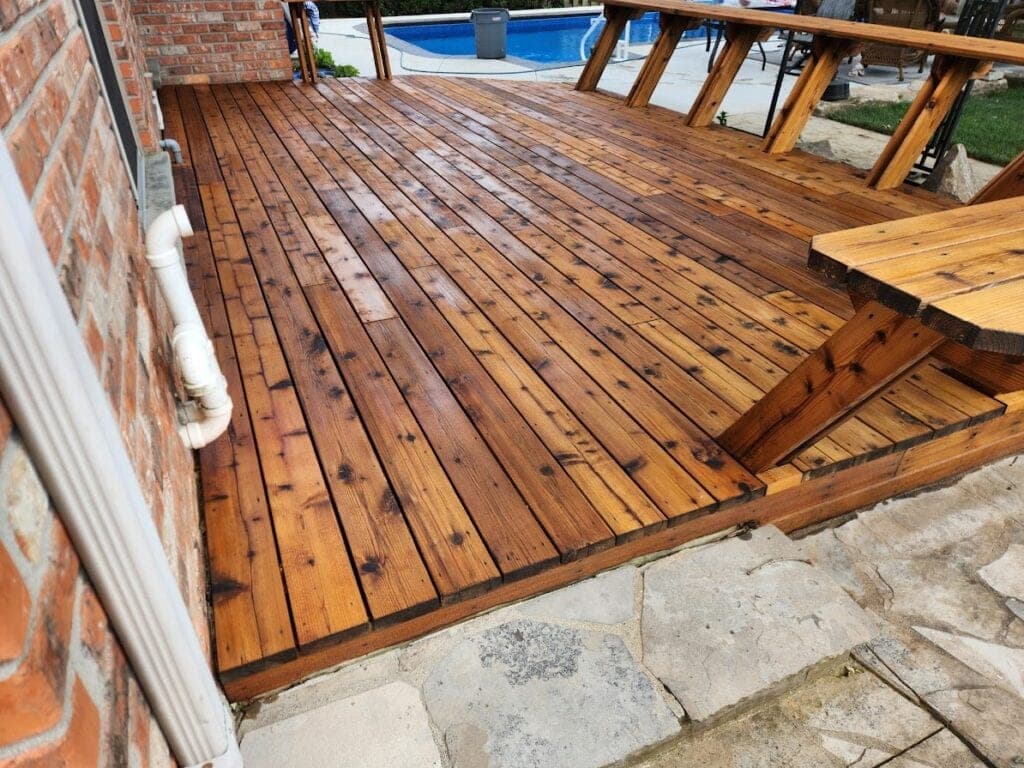
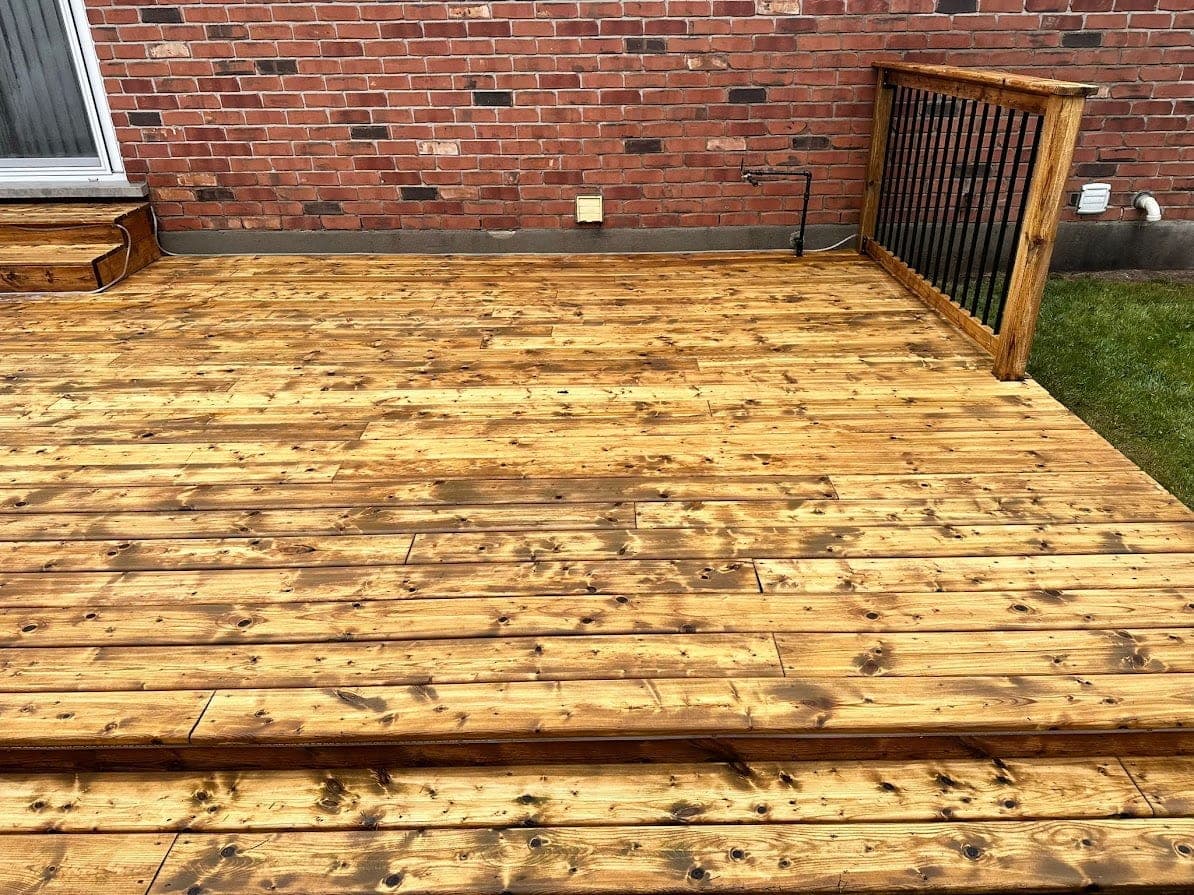
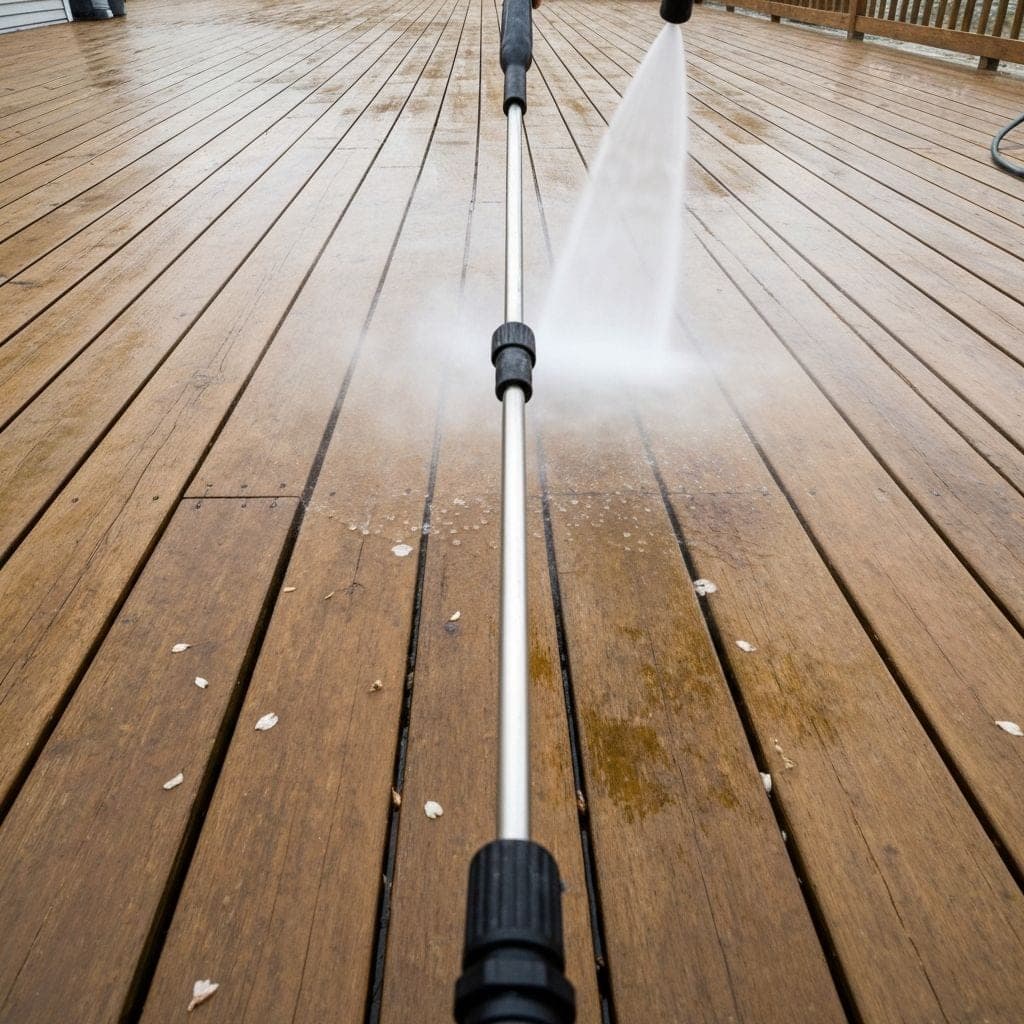
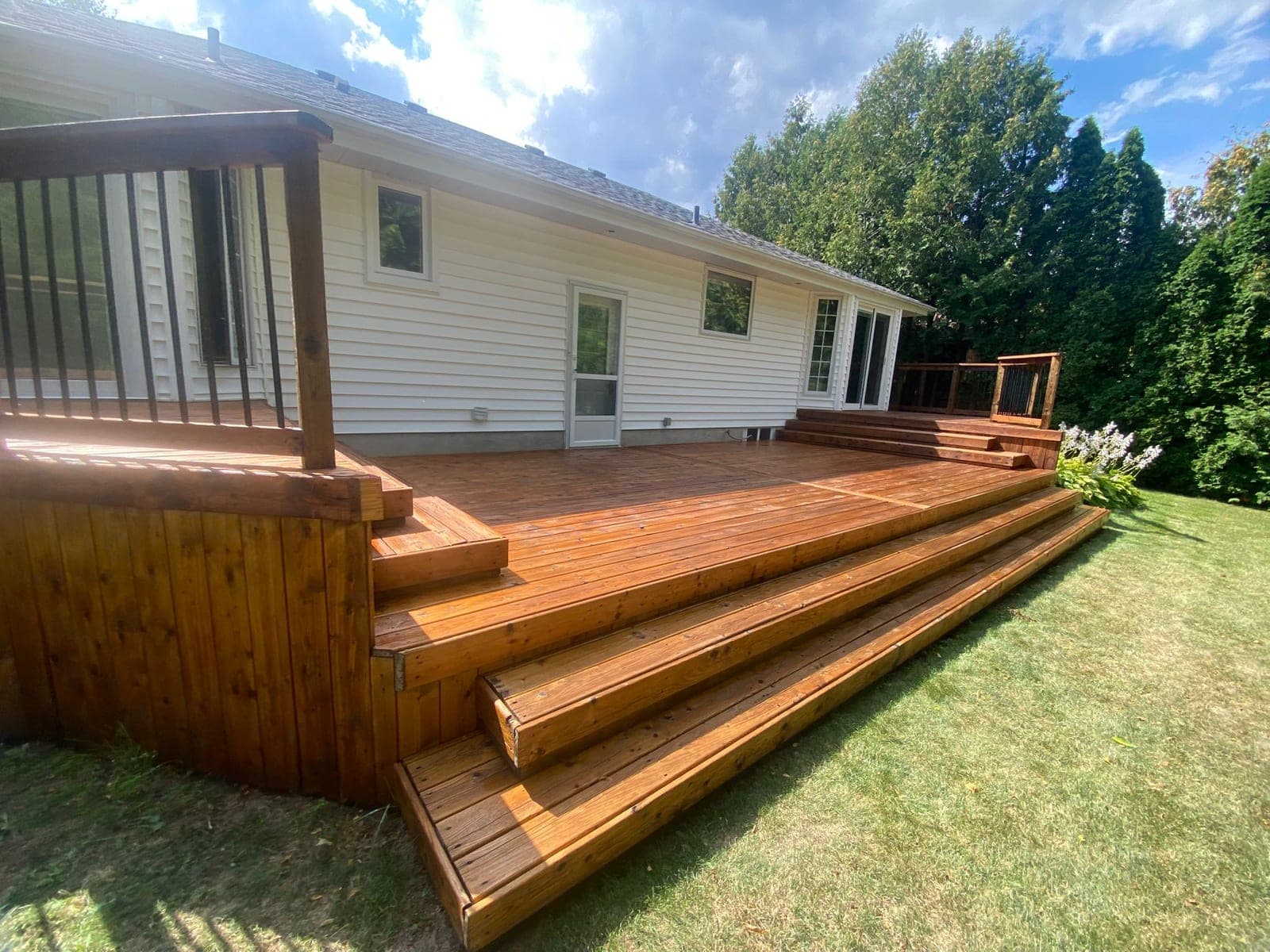
Because Restore My Deck operates out of Kitchener, we see the full range of what this city's decks and fences go through in a single season. The older, leafier streets around Idlewood and Chicopee sit under a heavy tree canopy that drops sap, seeds and leaf litter onto deck boards from spring through late fall. That organic debris holds moisture against the wood, and we regularly find dark mildew staining on the north-facing boards of decks in these areas even when the homeowner has been diligent about sweeping. Newer neighbourhoods such as Huron Park and Williamsburg have the opposite issue: full sun exposure on decks with little mature landscaping yet, which means the pressure-treated lumber greys and dries out faster and needs UV protection sooner than a shaded deck would.
Housing stock shapes the work
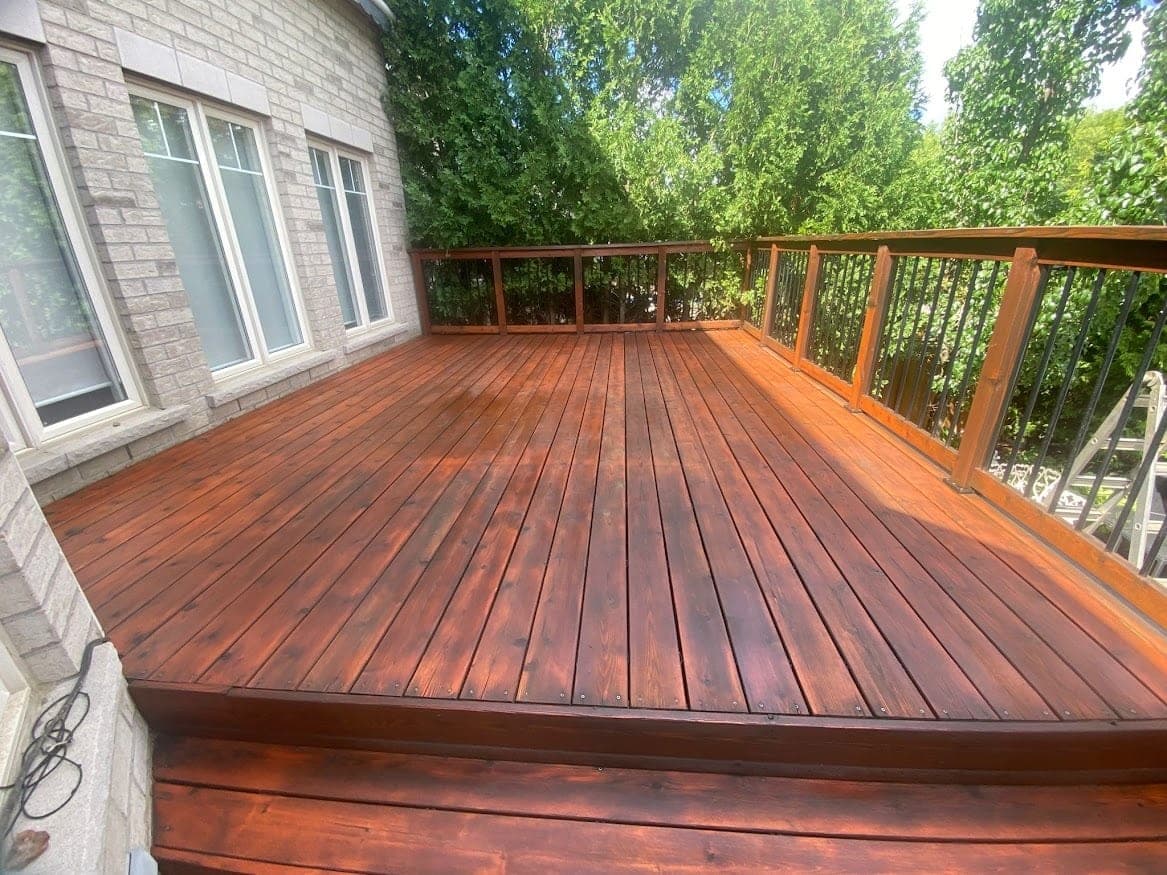
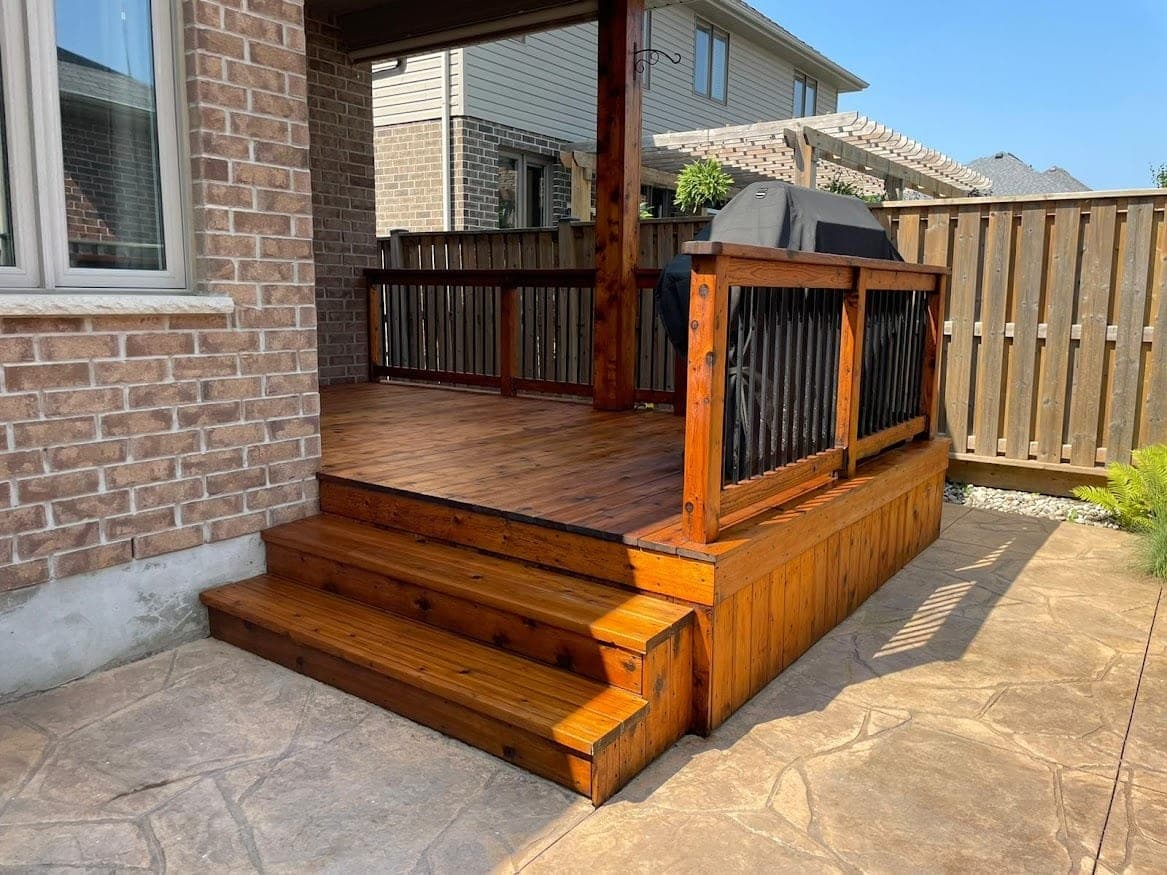
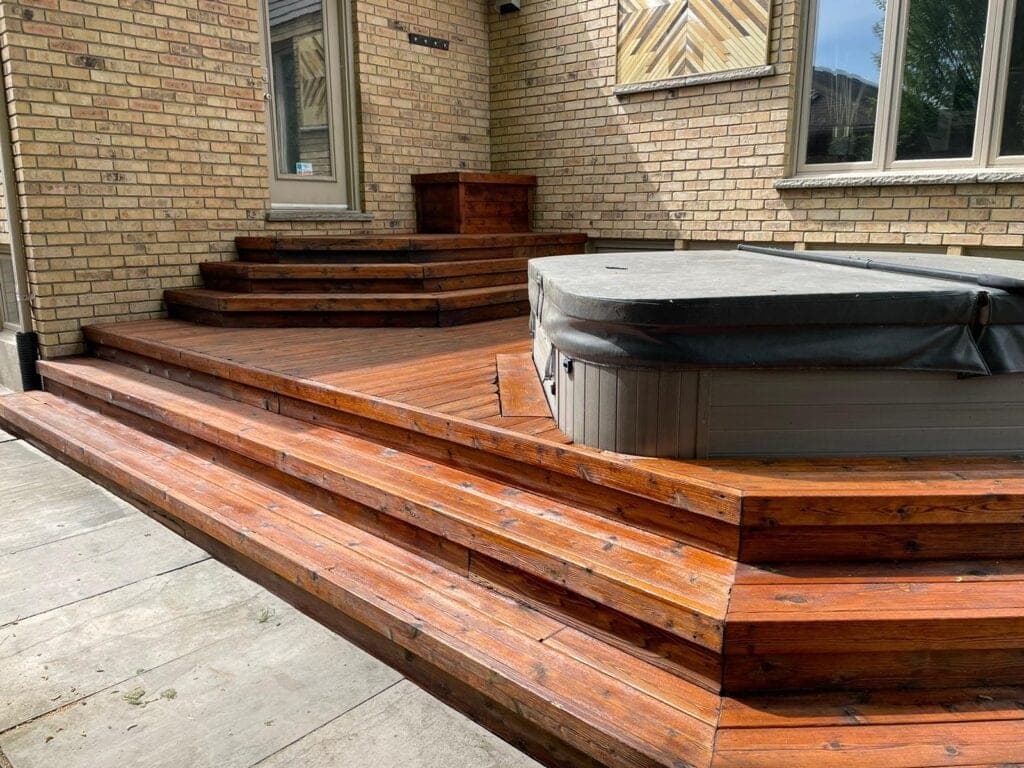
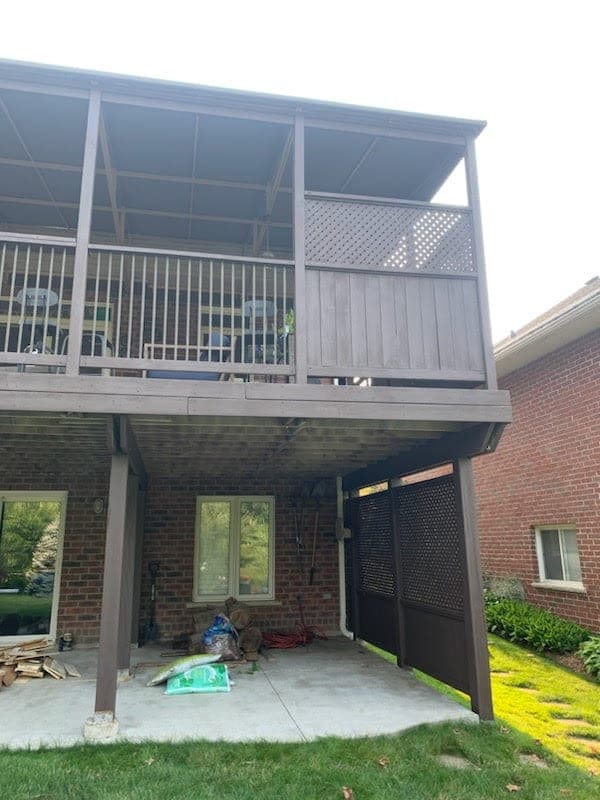
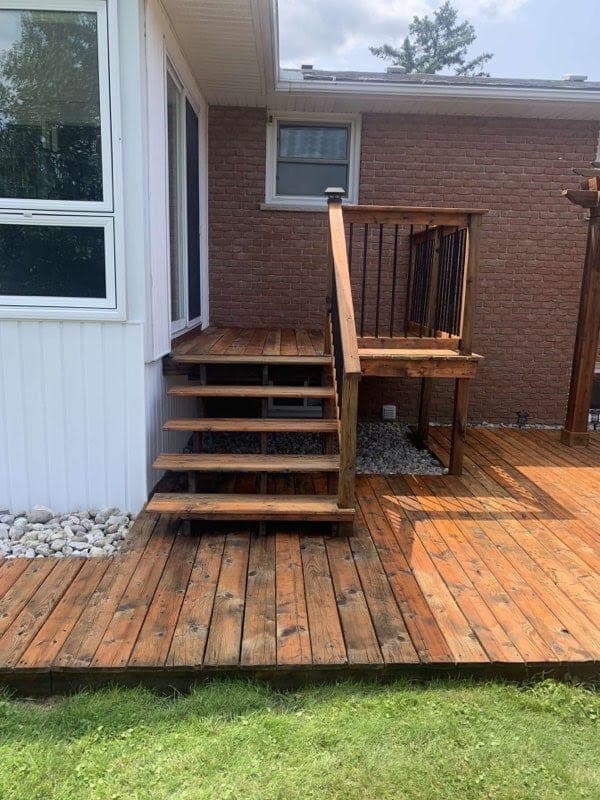
Doon and Pioneer Park still have a good number of older bungalows and split-levels from the 1970s and 80s, many with the original pressure-treated deck structure that has been re-stained multiple times over the decades. These decks often need a more aggressive clean and a careful hand-sand around fasteners before staining, since older PT lumber can have inconsistent absorption after years of different products being layered on top of each other. Stanley Park and Forest Heights, by contrast, have a mix of post-war housing and more recent infill, so we see everything from small, low-to-grade decks to larger two-tier structures with glass or aluminum railings that need the wood sections masked off carefully during staining.
Fences in Kitchener's older grid
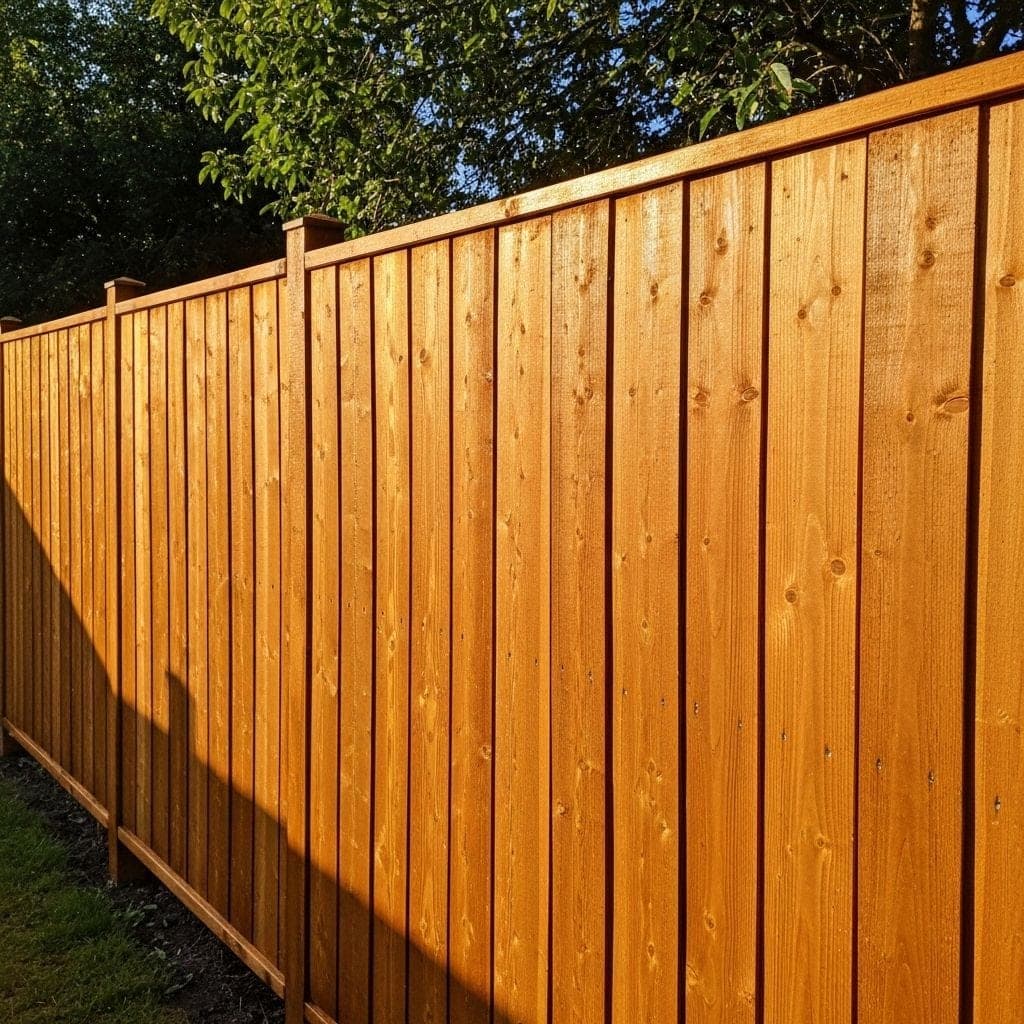
Cedar fencing is common throughout Kitchener's established neighbourhoods, particularly where properties back onto laneways or shared yards in Forest Heights and Williamsburg. Board-on-board privacy fences that have never been stained tend to silver unevenly, with the sun-facing side turning grey years before the shaded side. We soft-wash these fences before staining rather than blasting them with high pressure, since older cedar pickets can split if hit with too much force, and we brush-apply a semi-transparent stain so the grain still shows through once the fence is finished.
Timing your project around the season
Late spring through early fall is our busiest window in Kitchener, and homeowners who want their deck ready for patio season should book in April or May before the schedule fills. We also see a smaller wave of fall bookings from people getting their fence and deck sealed before winter, since a properly stained deck handles freeze-thaw cycles far better than bare, weathered wood. Most Kitchener projects take about two days including drying time; larger properties in Doon or Chicopee with wraparound decks or long fence runs can run to three days.
What we recommend for most Kitchener homes
- Shaded decks under mature trees: plan on cleaning and inspecting yearly, restaining every 2-3 years
- Full-sun decks in newer subdivisions: expect faster fading, restain every 2-4 years
- Older PT decks with layered finishes: budget extra time for prep sanding
- Cedar fences facing south or west: semi-transparent stain to slow UV greying
Repairs before staining
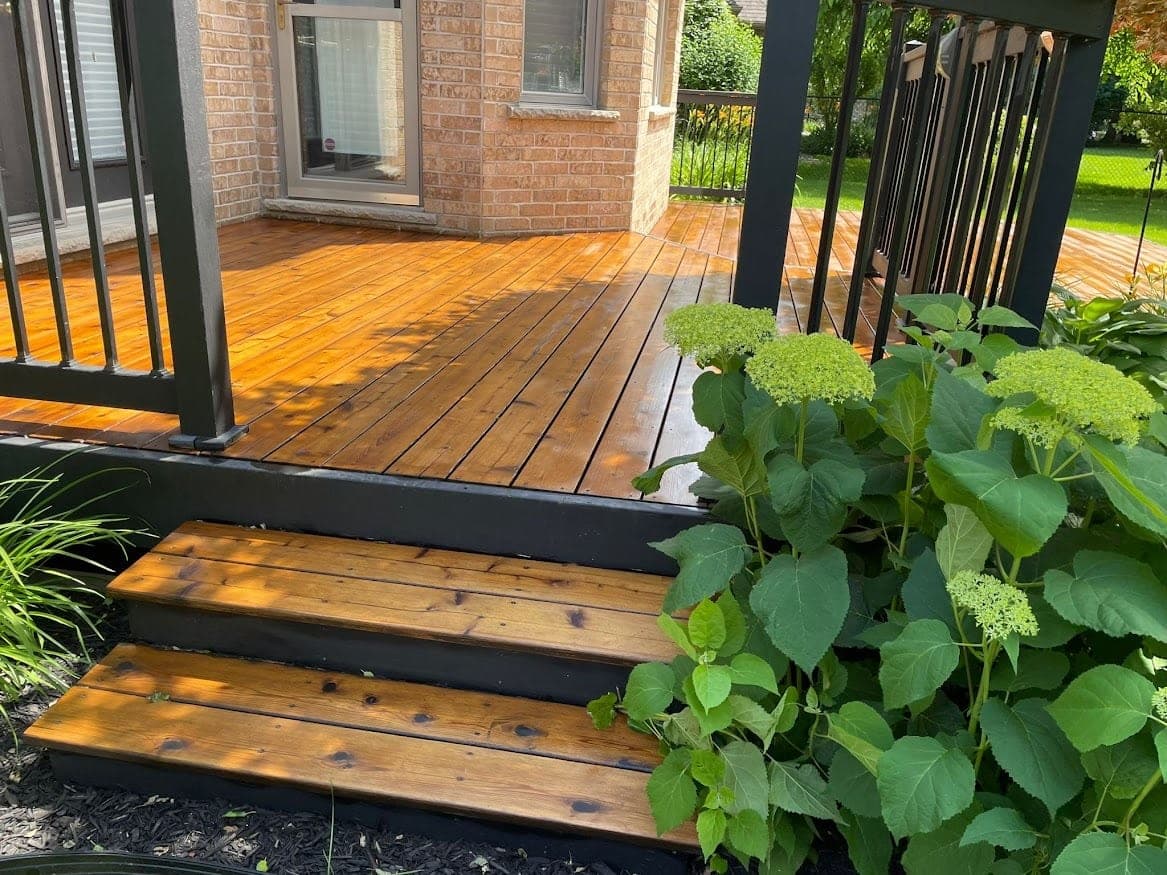
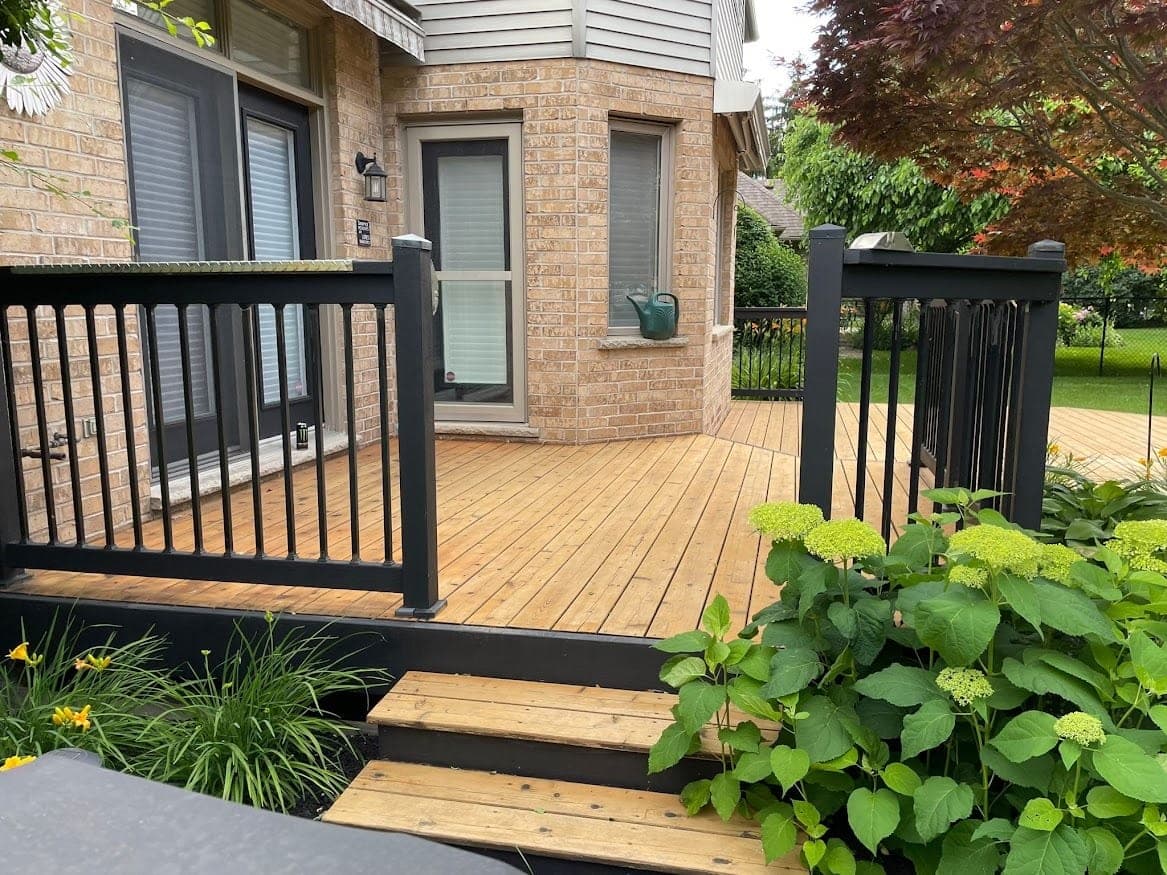
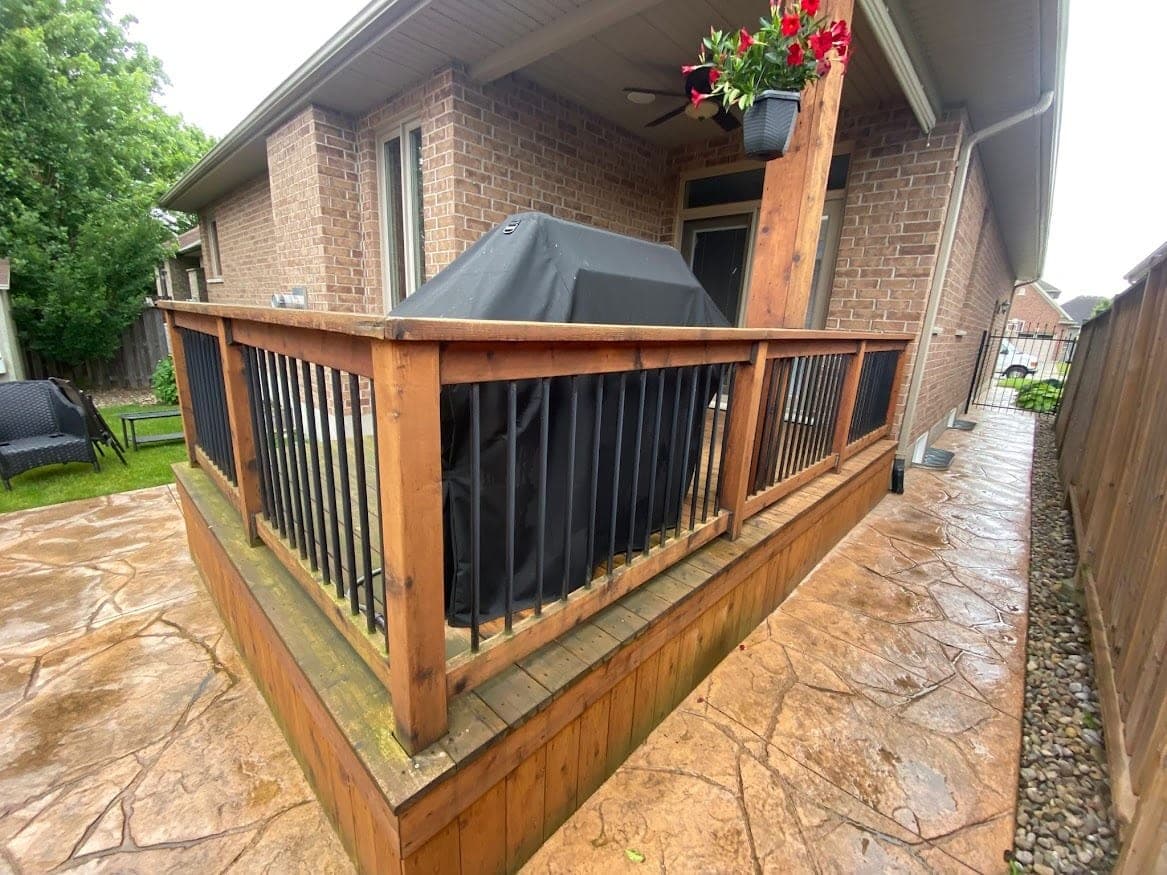
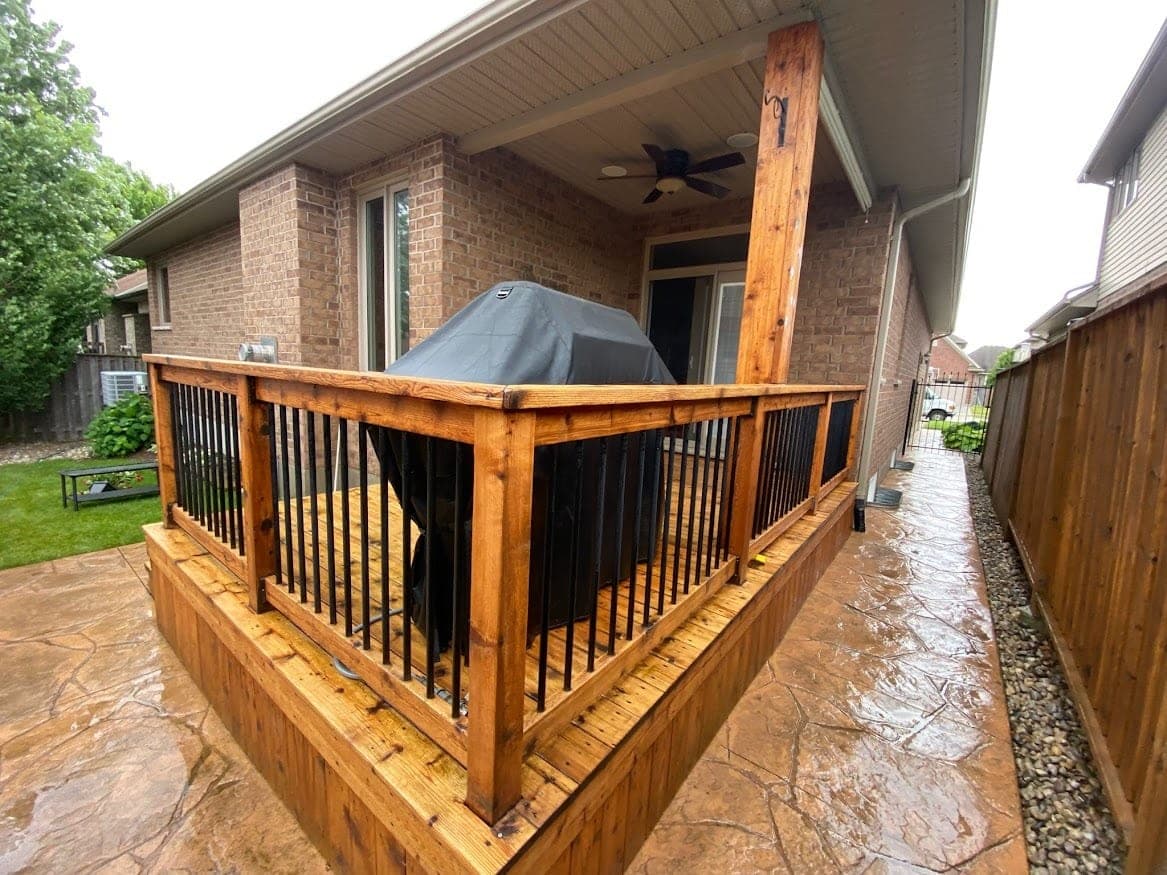
Older Kitchener decks in Doon and Pioneer Park sometimes need more than a clean and a coat of stain. Loose boards, popped fasteners, or a railing post that has softened at the base are common on structures that have been standing since the 1980s or 90s. We flag structural issues during our on-site assessment and repair them, via /deck-repair-and-maintenance, before sanding and staining begin, since a beautiful finish on top of an unsafe frame is not a real fix. On newer decks in Huron Park and Williamsburg, repair needs are far less common, and the main job is protecting wood that is still structurally sound but starting to grey.
Whatever your street looks like, see /deck-staining and /fence-staining for how we approach each project, or head to /contact-us and send a few photos of your deck or fence for the fastest, most accurate quote.