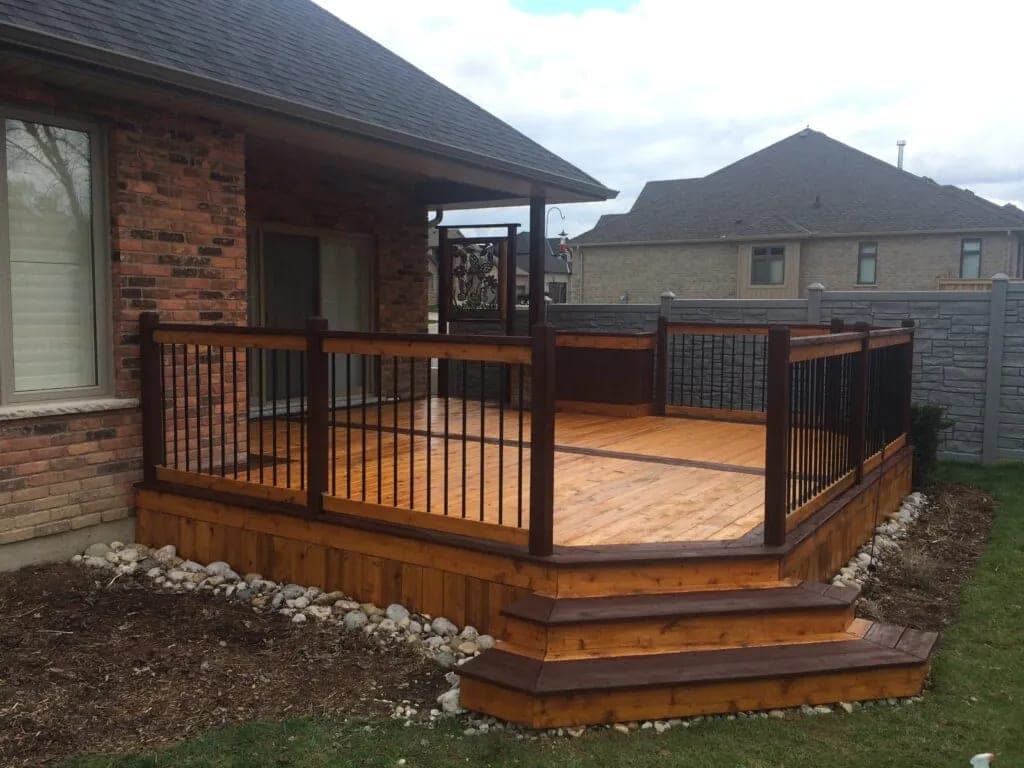
Sealing versus staining: what's the difference
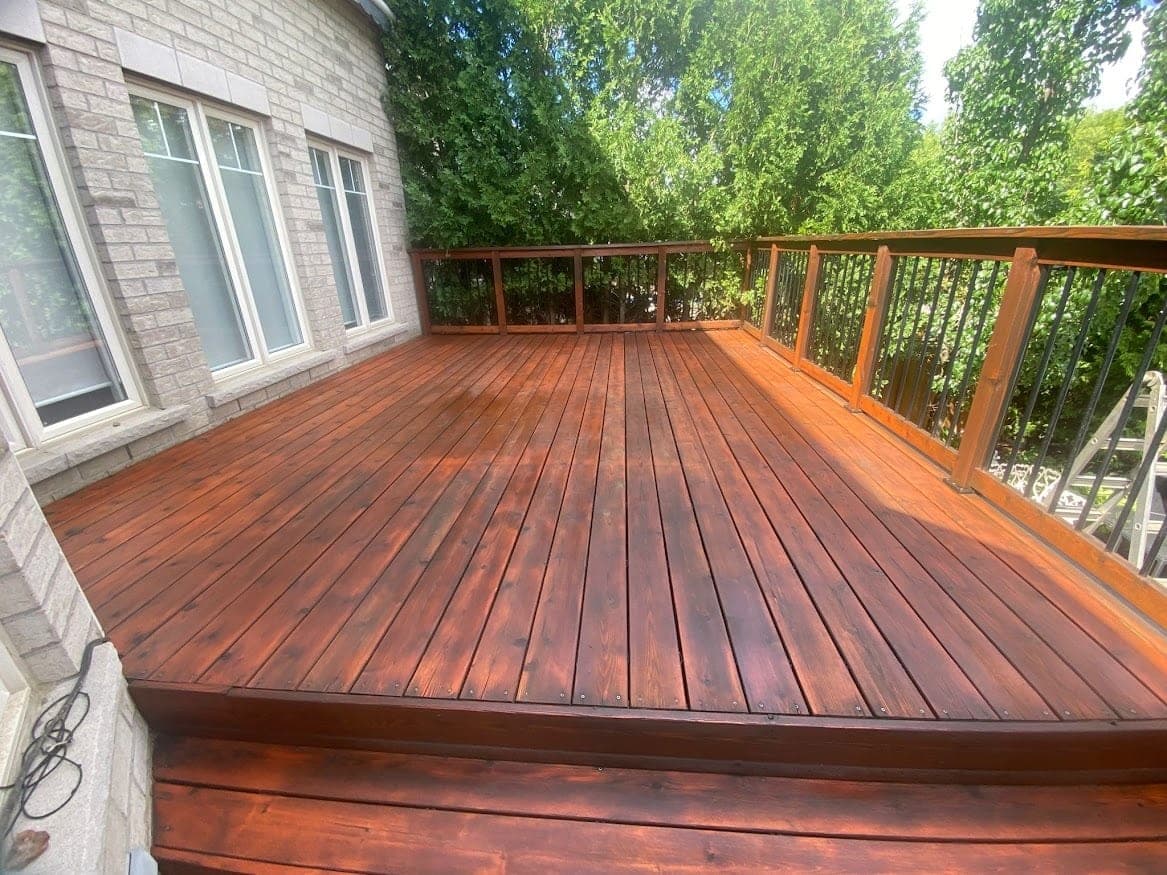
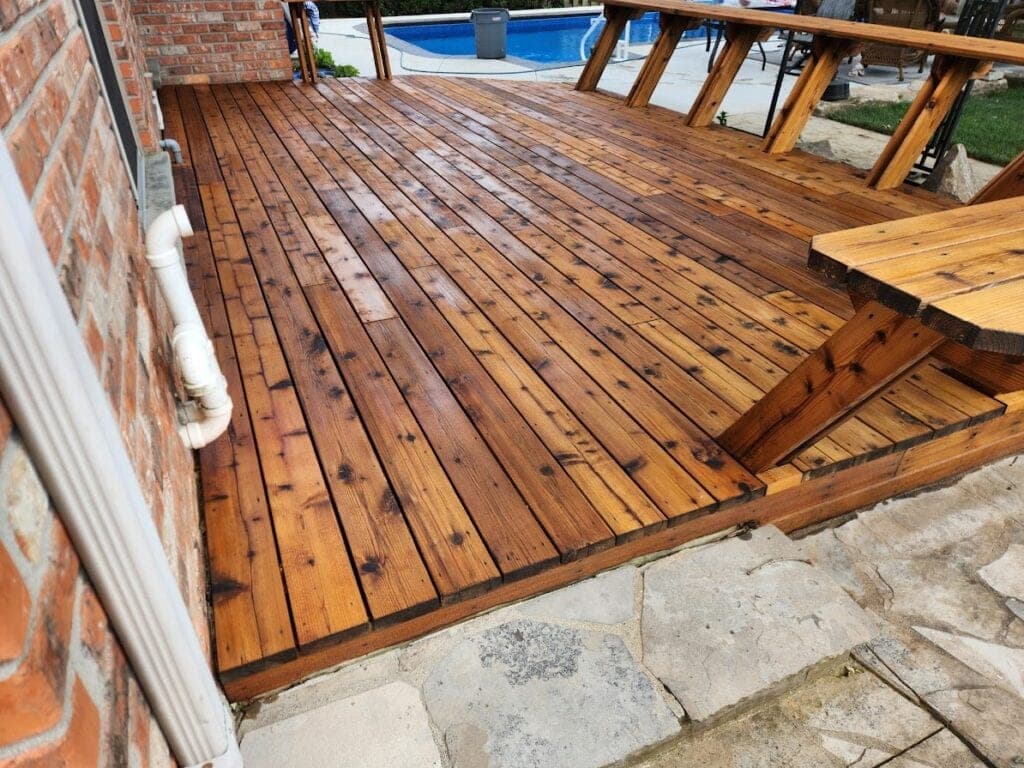
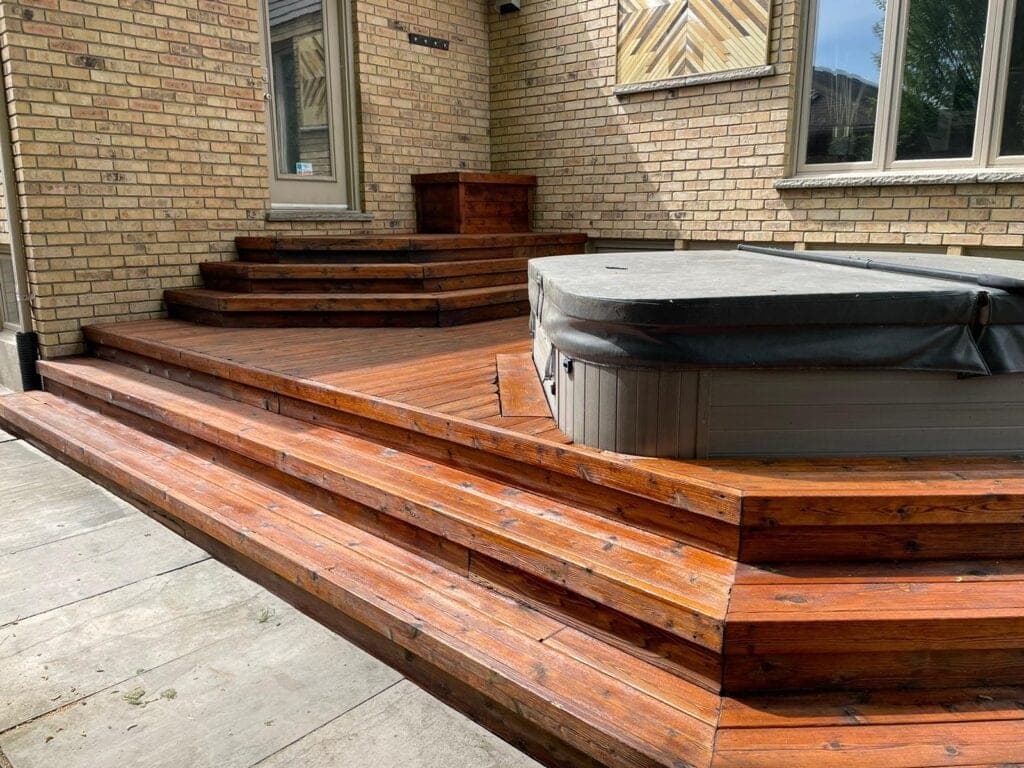
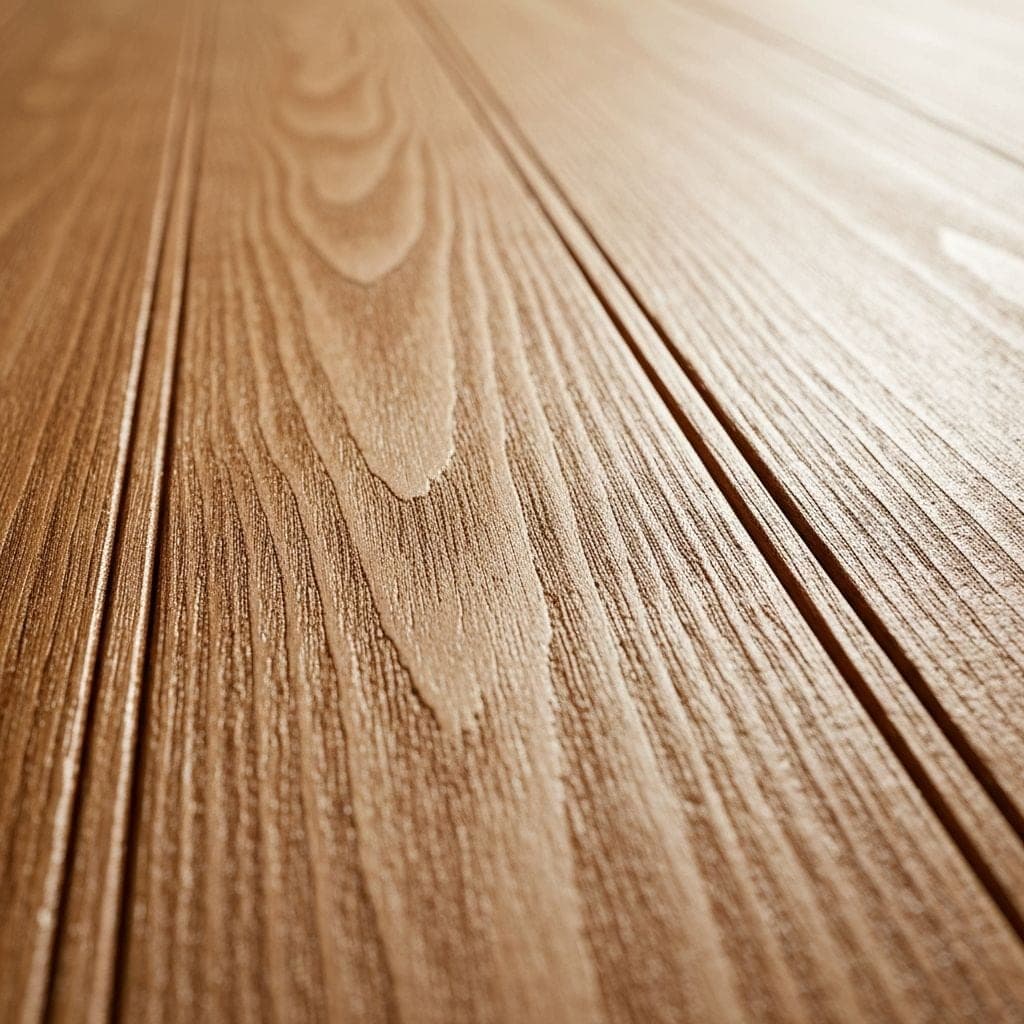
Sealing and staining both protect wood, but they do it with different priorities. A transparent or semi-transparent sealer is built to let the wood's natural grain, knots and colour show through with minimal tinting, while still creating a barrier against moisture. Staining, by comparison, adds more colour and pigment along with protection. If your deck is newer, built from attractive cedar, or you simply prefer the look of bare wood with a protective sheen rather than added colour, sealing is usually the better fit. If you want a specific colour, better UV resistance, or you are covering up years of weathering, our /deck-staining service is likely the stronger option.
Why moisture protection matters more here than almost anywhere
Southwestern Ontario's winters are hard on unsealed wood. Snow sits on deck surfaces for weeks at a time, melts partially during warm spells, refreezes overnight, and repeats that cycle through most of January and February. Every time water gets into unprotected wood grain and then freezes, it expands and forces the fibres apart, which is how checking, cracking and cupping start. A quality transparent sealer creates a barrier against that moisture intrusion, and while it will need reapplication more often than a heavier stain, it does the job of keeping water out of the grain during the months it matters most.
Transparent versus semi-transparent sealers
- Transparent sealers show the most wood detail and grain but offer less UV protection, so they typically need reapplication every year or two
- Semi-transparent sealers add a light tint that provides stronger sun protection while still letting grain show through
- Transparent works best on newer, attractive cedar where you want the wood itself to be the feature
- Semi-transparent suits pressure-treated pine or older wood where a bit more colour helps even out the surface
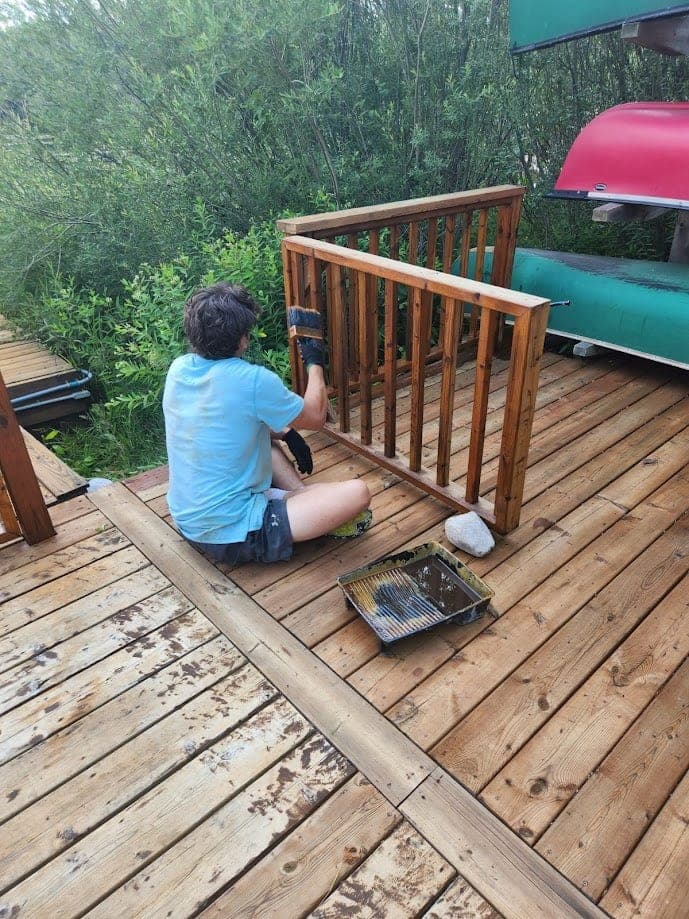
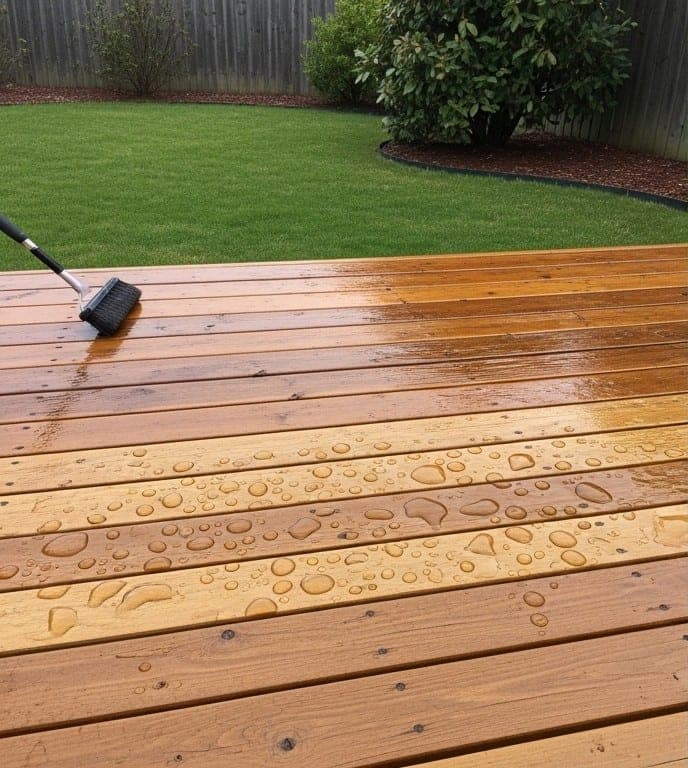
- Both types are brush-applied by our team to maximize how deep the product penetrates
How pressure-treated pine and cedar take sealer differently
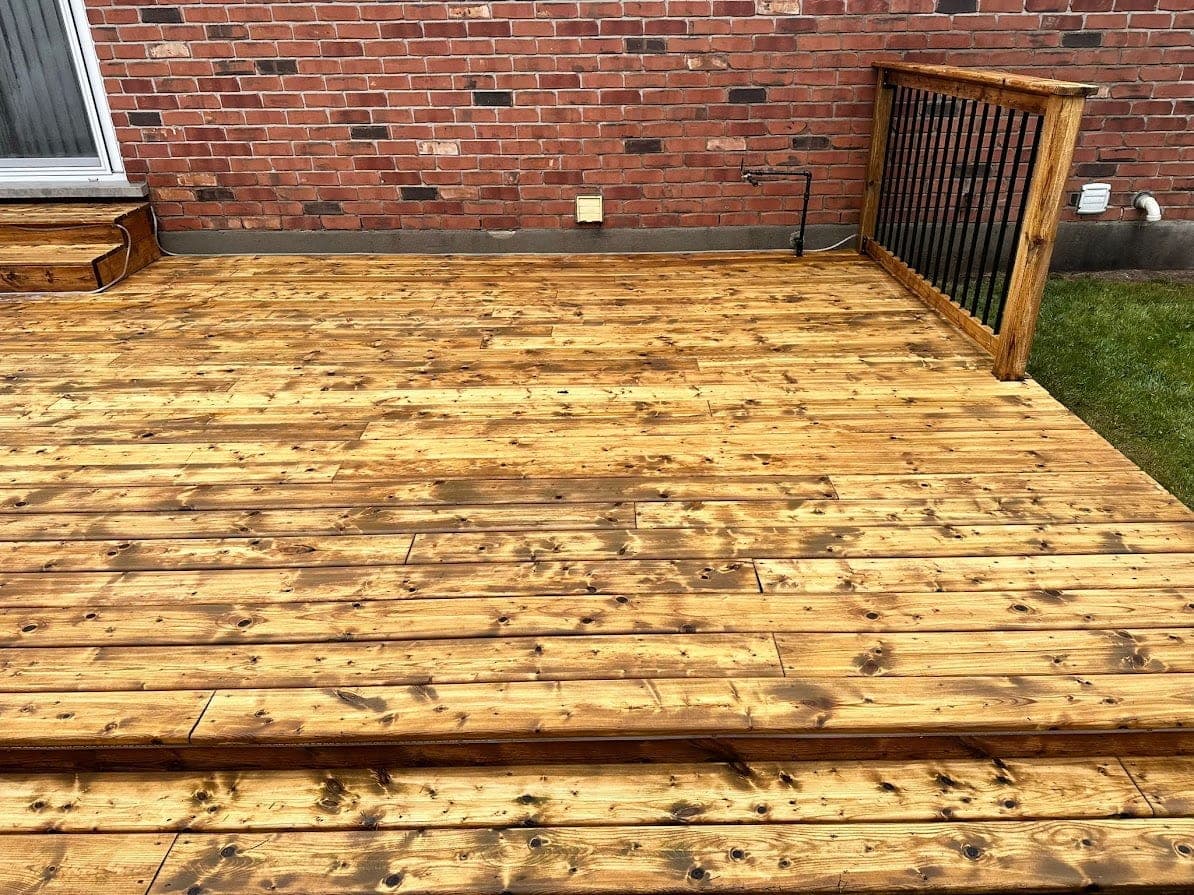
Pressure-treated pine has a tighter, more uniform grain and absorbs sealant somewhat differently than cedar, which has a more open, varied grain pattern that shows character but can also absorb unevenly if the surface has not been properly prepared. We choose sealer viscosity and application technique based on which wood we are working with, and we always start with a full clean, and sand if needed, so the sealer penetrates evenly across the whole deck rather than soaking in faster in some spots than others.
What sealing does not fully solve
Sealers, especially transparent ones, offer less UV protection than semi-solid or solid stains, which means the wood will continue to grey slightly over time even with regular sealing, just more slowly than if left completely untreated. If greying is a concern for you, a semi-transparent product slows it down further, though nothing fully stops it while still keeping the grain visible. Sealing also will not fix structural issues, so if your deck has loose boards, unstable railings or rot, that needs to be handled through /deck-repair-and-maintenance or a full /deck-restoration before sealing goes on.
Preparation and process
Every sealing job starts with a thorough clean to remove dirt, grime and remnants of any previous finish, since sealant applied over debris will not bond properly and will fail faster than expected. From there we help you choose the right sealer for your wood type, age and aesthetic preference, then apply it by brush for full coverage into the grain, end cuts and around railings. Once applied, we give the sealer time to dry fully before a final inspection confirms even coverage and proper adhesion across the whole deck.
Best time of year to seal a deck
Sealing works best in stable, moderate weather, which in our region generally means late spring through early fall. The product needs enough dry time to cure fully before rain or overnight dew arrives, and applying sealer too close to a temperature drop can leave it tacky or unevenly cured. Many homeowners in Kitchener-Waterloo choose to seal in early fall specifically so the deck heads into winter with fresh moisture protection in place, since that is exactly the season when a sealed surface earns its keep the most.
Serving Kitchener-Waterloo and beyond
Restore My Deck provides sealing services across Kitchener, Waterloo, Cambridge, Guelph, Hamilton, Stratford, Woodstock, Fergus, Paris, Brantford, Elmira and St. Jacobs. Quotes are free and come with no obligation. For the fastest response, send photos of your deck through /contact-us so we can give you an accurate estimate before scheduling a visit.